Regardless of what you call it, you don’t want to ruin your next release.
It's likely you've come across discussions (and debates) around what some call a song, an album, or a record. We can't assume we're all talking about the same thing—especially when the majority of music is no longer released and distributed on a physical medium.
Let's start with the Grammy awards and the difference between winning Record of the Year versus Song of the Year:
"Simply put, Record Of The Year deals with a specific recording of a song and recognizes the artists, producers and engineers who contribute to that recording, while Song Of The Year deals with the composition of a song and recognizes the songwriters who wrote the song." —Grammy.com
After working so hard to craft the song itself, don't ruin the record you're going to release for the world to hear by committing any of these cardinal sins:
CHOOSING THE WRONG SONG
I'm not even going to call it a bad song, as "bad" is subjective. I'm talking more about the wrong song for you or for your band; the song that doesn't mean anything to you. A song that isn't quite finished yet. The song that goes nowhere and doesn't have anything to say. Even instrumental music can tell a good story when done right.
PERFORMING WITHOUT EMOTION
It's too easy to blame a weak performance on a nervous or inexperienced musician. Let's talk more about trying to get the right performance from the wrong person. This can be an especially tough pill to swallow when it's YOU trying to perform a particular part that just isn't working out. Consider changing the part or bringing in someone who gets what you're going for and who you can trust to make it happen.
The right song will always tell you if that emotion/energy/vibe ought to be angry, sad, happy, passionate, or whatever—but you'll probably never convey it to the listener as long as you're struggling just to play or sing the part.
Serve the song and reinforce the record by capturing an emotional performance the listener can connect with.
NOT RECORDING WHAT WAS NEEDED
While the producer can help the creative and artistic side, the tracking engineer is much more focused on the technical side of your record. A tracking engineer's primary job is in capturing a clean recording of each performance, yet far too many epic takes have been lost because the tape just wasn't rolling or the hard drive wasn't spinning.
When the best idea shows up or the magic finally comes together during a session, you do NOT want to look at the engineer asking "Did you get all that...?" just to have them say "Oh, sorry. I thought we were rehearsing" or "Oops, can we do that one again...?"
It's not all on the engineer though. Coordination and focus are both important parts of a productive recording session. Both can be a struggle when you're recording yourself, trying to wear two hats as both the artist and engineer. Consider bringing in some help to let you and your band focus on performing while someone else handles the technical side.
When you've captured everything you needed during the recording phase, it becomes easier to make the decisions that will follow during editing, mixing, and mastering.
Regardless of whether your new song is for a standalone single or part of a larger collection, the last thing you want to do is to sabotage your best efforts as you make your recording and release the resulting product to your audience.
Do everything you can to avoid ruining your next record.
Do everything you can to bake the following ingredients into your next record:
A clean recording that captures an emotional performance of a great song.
What have you struggled with in making your latest record? I'd love to hear what you've been working on and how I can help you. Tell me about your music!
Whenever you find something of value here, please share it on social media and within your musical circles.
Please Subscribe
get thoughts on music-making & making music thoughtful
we respect your privacy

I’ve launched a new series of Getting Started videos to support anyone who wants to record their music but may not even know where to begin. Start with what you have before investing more time & money; you can scale your efforts as your musical goals change & budget allows.

I've written an interactive eBook to introduce the basic steps you'll need to complete if you really want to finish your new song, record it, and have it released to your audience.Best thing is, IT'S FREE! No gimmicks. It's simply my gift to you for being a music-maker.

I've posted a short video showing how you can quickly get your phone or tablet set up for recording your voice and instruments onto individual tracks that can then be easily shared and downloaded across multiple platforms. Get started making more music, more often!

While many people already know how to save their finished song as a single stereo file to iTunes, fewer may be familiar with the process of properly exporting multi-track files from iOS GarageBand to collaborate with other musicians, producers, and mix engineers.

While workflows will vary from project to project and personal preferences always play a role, there are some items that are simply required. I've separated these from the "nice to have" items but often times it's several small things that will add up to either keep the project moving forward or to rob it of your time, money, and objectivity.

When inspiration strikes, you need to be able to easily capture your ideas with whatever device you have with you. For more and more people, this is becoming an Android phone.

Be strategic with your purchases to better integrate them into your existing music-making workflows.

Don’t sabotage your best efforts as you make your recording and release it to your audience.

Lessons learned from mastering your songs can also impact every other stage in the music-making process.


Don't miss the opportunity to make the song your own by injecting your personality and distinctive sound.
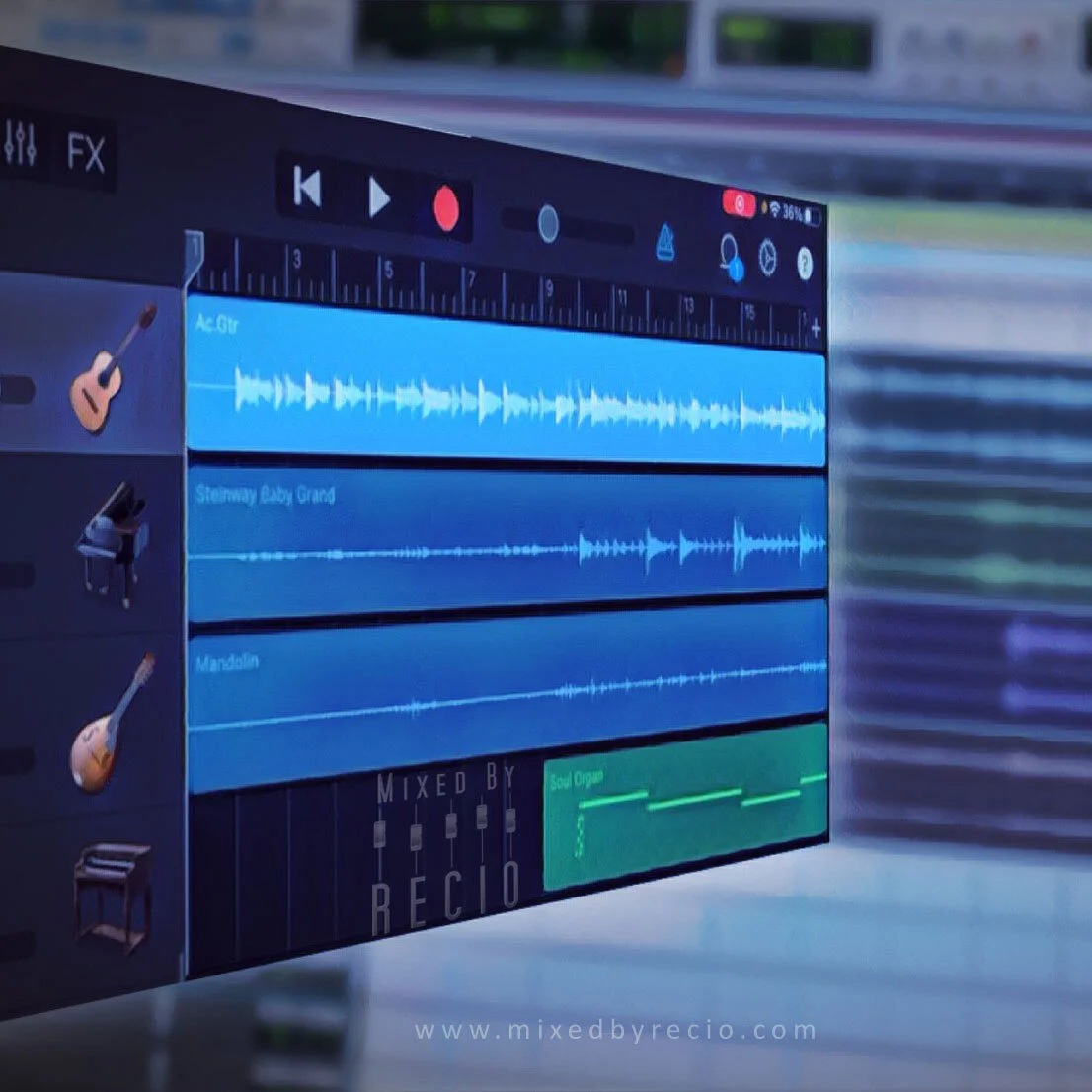
This video shows how to export individual multitrack files from iOS GarageBand and includes steps for converting MIDI tracks to audio.

While it can be difficult to take pride in everything you create, take pride in the fact that you are creating something.

Fix before you mix. Start the mixing phase with the audio you want to be mixed, not fixed.

Use the limitations of your mobile app to focus on capturing one solid performance at a time.

My new YouTube series on Getting Started continues with a short video that establishes the need to use headphones to monitor your audio while recording your music.
I’ve launched a new series of Getting Started videos to support anyone who wants to record their music but may not even know where to begin. Start with what you have before investing more time & money; you can scale your efforts as your musical goals change & budget allows.

With remote collabs, you can quickly have a full production ready for mixing & mastering without having to get dressed or leave your home.

Music is something that is needed more than ever. If we can’t support each other financially, we can support each other creatively to ensure that new music can—and will—still be heard.


Separate the song from the recording of the song to tell us a good story and make us feel something.


You shouldn’t have to wait until the tracking session or live gig to figure out if a song will come together the way you hope it will.

When someone hears your song for the first time, you have one chance to make that first impression. Will they listen until the end? Will they listen at all or press Skip?
More than anything else, your final mix is dependent on the efforts put into the songwriting, the performance, and the recording going into it.

It’s not just about proper credit but collecting potential revenue to fund your art. You know how hard you worked on your song. Take the steps to protect your rights..


Finding good answers to your music-making questions can be frustrating. I'd like to share my answers to common questions in hopes that it helps you and your music get to the place you want to be, sooner rather than later.

The recording stage of the process is critical because that's when we actually get to make music. Sometimes small changes make a big difference in getting the results you want.

Unplug to rediscover your song’s core vibe. It's not uncommon to spend a lot of time and effort building out a full production of a song only to scrap it all and go back to its roots. We can become unable to hear that the song was already there, and it was working quite well before we buried it underneath too many well-intended ideas.

Songwriters love their music for different reasons than the casual listener does, so how can we make music worth loving?

Here are 5 musical routines you can implement throughout this new year to help generate and finish more of your song ideas while staying better prepared to record and release them to your audience.

Develop a creative workflow and then find technology that will compliment your process, not complicate it. Remember that the level of quality in our music has to be preserved by the songwriters and the musicians, not the tools.

When used wisely, technology can be an incredibly effective tool for creating new music but it can also become the biggest hurdle in creating music that still feels musical. There must be a balance between efficiency and originality. We need to find tools to enhance our creativity, not to restrict, and certainly not to replace our creativity.
This video shows how to export individual multitrack files from iOS GarageBand and includes steps for converting MIDI tracks to audio.